
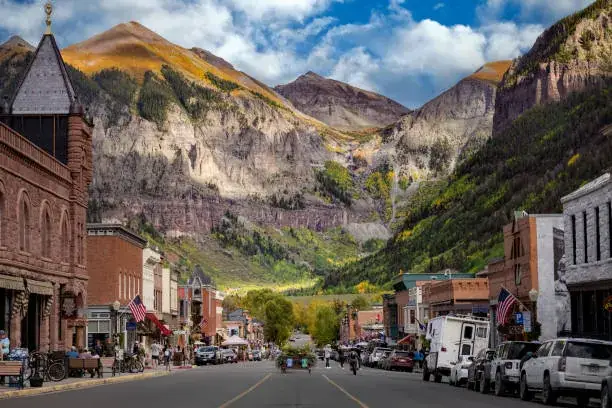

Colorado's mountain towns are a different financing universe than the Denver metro. Properties in Eagle County (Vail), Pitkin County (Aspen), San Miguel County (Telluride), and Summit County (Breckenridge/Keystone) carry price tags that regularly exceed $1M — and often $5M+. The financing landscape includes high-balance conforming loans, true jumbo products, condo warrantability challenges, and complex second-home vs. investment classification rules that affect your rate and down payment.
Conforming Limits in Mountain Counties (2026)
High-cost counties have elevated conforming limits set by FHFA:
| County | Markets | 2026 Conforming Limit |
|---|---|---|
| Eagle County | Vail, Beaver Creek, Avon | $1,249,125 |
| Pitkin County | Aspen, Snowmass Village | $1,209,750 |
| Summit County | Breckenridge, Keystone, Dillon | $1,092,500 |
| San Miguel County | Telluride, Mountain Village | $994,750 |
| Routt County | Steamboat Springs | $1,089,050 |
| Grand County | Winter Park, Granby | $883,200 |
| Garfield County | Glenwood Springs | $1,209,750 |
Loans at or below these limits qualify for conventional (Fannie/Freddie) pricing. Above these limits, you enter jumbo territory with portfolio or private bank products.
Second Home vs. Investment Property: The Critical Distinction
Lenders classify your purchase as either a second home or investment property — and the rates and down payment requirements differ significantly.
Second Home requirements:
- You occupy the property for personal use for some portion of the year
- You do NOT rent it out primarily for income (occasional rental OK)
- Down payment: 10% minimum
- Rate: ~0.25–0.50% above primary residence rates
Investment Property (non-owner occupied):
- Primarily rented out (Airbnb, VRBO, long-term)
- Down payment: 15–25%
- Rate: ~0.50–1.00% above primary residence rates
If you plan to rent your Vail condo on VRBO heavily, your lender may classify it as an investment property — which affects pricing and qualification. Be transparent with your mortgage broker about intended use.
Condo Warrantability in Mountain Markets
Many ski-town condos fail Fannie/Freddie warrantability guidelines:
Common issues:
- High STR concentration: if more than a certain % of units are non-owner-occupied, the project may be "condotel" — ineligible for conventional financing
- Commercial space: buildings with significant hotel amenities (front desk, daily maid service, rental pools) are often classified as condotels
- Litigation: HOA disputes or construction defect suits trigger non-warrantable status
- HOA finances: underfunded reserves or excessive delinquencies
Solutions for non-warrantable condos:
- Portfolio loans: local or regional banks (Alpine Bank, FirstBank, Colorado State Bank) often hold mountain condo loans in-house
- Jumbo non-QM: private lenders offer products for non-warrantable condos at 20–30% down
- LLC portfolio financing: if you're buying for investment, DSCR + portfolio can work for non-warrantable units
Always verify condo warrantability early — before you have an offer accepted.
Jumbo Financing in Mountain Towns
For purchase prices above county conforming limits:
| Feature | Jumbo (Portfolio/Private) |
|---|---|
| Typical down payment | 20–30% |
| Minimum credit score | 700–720 |
| Rate premium vs. conforming | +0.25–0.75% |
| Cash reserves | 12–24 months PITIA |
| Income documentation | Full doc or bank statements |
| Property types | SFR, condos (warrantable required for agency; portfolio flexible) |
For Aspen and Vail properties in the $3M–$10M+ range, private banking relationships (wealth management arms of large banks) often provide the most competitive jumbo structures.
Specific Market Notes
Vail / Eagle County:
- Many Vail Village and Lionshead condos are condotels — verify warrantability before writing an offer
- Lion Square, Vail Mountain Lodge, and similar hotel-condo hybrids typically require portfolio financing
- Standalone SFR and townhomes generally warrantable
Aspen / Pitkin County:
- Median prices among the highest in the nation ($4M+ for SFR)
- Most transactions involve jumbo or ultra-jumbo private banking structures
- Down payments of 20–30% standard; reserves of 12–24 months expected
Telluride / San Miguel County:
- Mountain Village condos may have STR restrictions (HOA permitting)
- Free Market vs. Employee Housing distinction — only Free Market housing is financeable with conventional products
- Strong STR market in some Mountain Village condo buildings
Breckenridge / Summit County:
- More accessible price points ($600,000–$1.5M for many condo units)
- Some projects in Breckenridge are STR-permissive and conventionally warrantable
- Town of Breckenridge STR licensing required — verify with listing agent
Steamboat Springs / Routt County:
- Strong year-round rental market (summer + ski)
- $1,089,050 conforming limit gives more flexibility than many buyers realize
- Gondola condos and ski-in/ski-out properties may be condotels
How to Structure a Mountain Town Second Home Purchase
- Confirm condo warrantability with your mortgage broker before writing an offer
- Clarify second home vs. investment — be honest about STR plans
- Get pre-approval with the high-balance conforming limit in mind if purchase price is under the county ceiling
- For jumbo purchases, engage your mortgage broker 45–60 days in advance to identify the right portfolio/private banking product
- Reserve documentation — lenders will verify liquid assets post-close; gather account statements early
- STR income: if you want rental income to count toward qualification, a DSCR or investment property loan is usually required
FAQ
Can I use STR income to help qualify? If it's a second home structure, no — lenders don't count Airbnb income for second home qualification. If it's an investment property loan (DSCR), yes.
What's the minimum down payment for a mountain condo? 10% for second home (if warrantable), 15–25% for investment property. Non-warrantable condos typically require 20–30% through portfolio lenders.
Are HOA fees high in ski towns? Yes — expect $800–$2,500+/month in ski-in/ski-out buildings. Factor HOA into your total housing payment for DTI qualification.
Do I need local flood or fire insurance? Wildfire risk is real in many Colorado mountain communities. Insurers are increasingly requiring supplemental wildfire coverage, which adds to carrying costs.
Let's Finance Your Mountain Property
I specialize in complex mountain town transactions — from high-balance conforming in Summit County to jumbo portfolio products for Pitkin County buyers.
📞 970-708-9624 | tj@taytoncapitalllc.com
Get Pre-Approved → | Contact Tayton Capital
Related articles
Buying a Home in Cortez, CO in 2026 — Mesa Verde Gateway Real Estate
What buyers need to know about Cortez, Colorado real estate in 2026. Affordable prices, USDA loans, VA financing, Mesa Verde vacation rental opportunity. Tayton Capital, NMLS #2106875.
Read articleFirst-Time Homebuyer Guide for Western Colorado in 2026
A complete guide for first-time buyers purchasing homes in Durango, Montrose, Grand Junction, Cortez, Glenwood Springs, and surrounding Western Slope communities. CHFA, FHA, VA, USDA explained. Tayton Capital, NMLS #2106875.
Read articleOuray, CO Real Estate & Mortgage Guide 2026 — Switzerland of America
What buyers need to know about Ouray, Colorado real estate in 2026. Median prices, second home vs. vacation rental structure, jumbo loans, and how to compete in the box canyon market.
Read articleMoving to Montrose, CO in 2026 — A Mortgage and Real Estate Guide
Everything you need to know about buying a home in Montrose, Colorado — median prices, neighborhoods, loan types, and why the Western Slope's most affordable major market is attracting buyers from across Colorado.
Read articleUSDA Loans in Western Colorado — Zero Down for Rural Buyers in 2026
How USDA Rural Development loans work for buyers in rural Western Colorado — Montezuma County, Delta County, Archuleta County, La Plata County, and more. Zero down, no PMI.
Read articleDSCR Loans for Telluride Vacation Rentals in 2026 — How It Works
How DSCR investor loans work for Telluride vacation rental properties. Qualify on rental income, not your W-2. Real numbers from the Telluride market.
Read article2026 First-Time Homebuyer Guide: Cortez & Montezuma County, Colorado
How to buy your first home in Cortez, CO — USDA 0% down, FHA, manufactured home financing, down payment assistance, and what to expect from the process in 2026.
Read articleBuying a Home in Mancos to Short-Term Rent Near Mesa Verde (2026)
How to finance a Mancos, CO property as a Mesa Verde short-term rental — DSCR loans, second-home vs. investment classification, STR permits, and what the numbers look like.
Read article